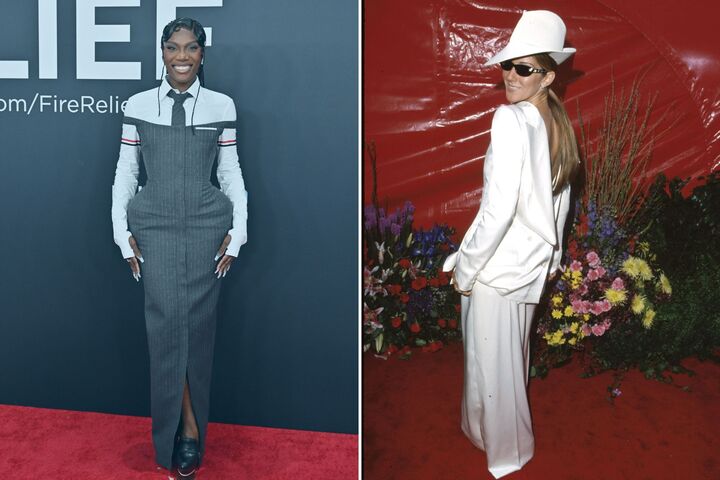
The Met Gala’s newest theme landed like a blank canvas dropped in the middle of a runway: equal parts thrilling and terrifying. With no clear decade, movement, or visual anchor, this year’s directive has left designers, celebrities, and stylists scrambling—not for fabric or sketches, but for meaning. “It’s not ‘Heavenly Bodies’ or ‘Camp,’” one A-list stylist confided. “This one doesn’t hand you the reference book. You have to write it yourself.”
And write it they are. From illusion nude gowns that flirt with censorship to sculpted suits channeling Da Vinci’s precision, predictions for the night’s most daring looks are veering into uncharted territory. We spoke with six top-tier celebrity stylists—each responsible for dressing some of fashion’s boldest names—to decode what might actually walk the red carpet when the theme’s ambiguity becomes its greatest creative fuel.
Why This Theme Is Different—And Why It’s Scaring Stylists
Most Met Gala themes offer a starting point: a historical period, a designer retrospective, a cultural movement. But this year’s concept—centered on perception, illusion, and the boundary between art and reality—doesn’t come with a mood board. Instead, it demands interpretation, philosophy, and nerve.
“It’s not enough to look artistic,” says Lila Chen, stylist for Florence Pugh and Paul Mescal. “You have to be making a statement about what art is. That’s a heavy lift when your client has to walk, schmooze, and not spill champagne in a 40-pound dress.”
The challenge isn’t just conceptual. It’s logistical. “If the theme was ‘Renaissance,’ we’d pull silhouettes, fabrics, iconography,” explains Malik Rhodes, who dressed Donald Glover last year. “Now? We’re asking, ‘Is the dress the art? Is the body the art? Is the reaction to it the art?’ That’s three different directions—and we have to pick one by next week.”
This open-endedness has led to a surge in mood boarding sessions that feel more like therapy than fashion prep. “We’ve had two-hour conversations about whether a sheer dress comments on vulnerability or just performs it,” says stylist Naomi Tran. “That’s the kind of nuance that keeps you up at night.”
The Naked Dress Debate: Provocation or Profundity?
The most immediate, and predictable, response to a theme about perception is the illusion of absence: the naked dress. But this time, the stylist community is divided on whether it’s a cop-out or a commentary.
“Naked dresses have been done,” says Chen. “If you’re going sheer, you better have something to say. Is it about the male gaze? About autonomy? About the history of censorship in art? Otherwise, it’s just another body on the carpet.”
Some stylists are pushing the trope into new territory. One concept currently in development involves a full-body second skin made of hand-embroidered mesh, designed to mimic unfinished oil sketches. “Imagine Botticelli’s Venus—if she’d been sketched, not painted,” describes Tran. “The dress looks nude from afar, but up close, you see the strokes.”

Others are embracing the shock factor—but weaponizing it. One male client is considering a fully sheer ensemble over a modesty bodysuit printed with censored bar codes—“like a museum label slapped over a forbidden work,” according to his stylist.
But not everyone’s convinced. “If your only statement is ‘I’m naked,’ that’s not art. That’s ego,” says Rhodes. “We’ve seen enough bodies. Let’s see some brains.”
Mona Lisa Suits and Art-Historical Homages
If the nude dress represents the literal edge of visibility, the other extreme is hyper-constructed homage—suits and gowns that directly reference masterpieces or artistic techniques.
Enter the “Mona Lisa suit”: not a literal costume, but a tailored ensemble that embodies the painting’s aura—mystery, stillness, precision. “It’s not about wearing the portrait,” explains stylist Darius Cole. “It’s about channeling her presence. That means muted tones, an unreadable expression, and clothes so perfectly fitted they look painted on.”
Cole’s team is testing a charcoal-gray wool suit with an asymmetrical lapel inspired by the painting’s landscape. “The cut mirrors the curves behind her. It’s subtle, but if you know, you know.”
Other stylists are mining deeper art history: - A gown in development mimics the cracked varnish of old masters, using layered tulle and shattered mirror appliqués. - One look borrows from Yves Klein’s Anthropométries, where nude models pressed against canvas—translated here into a dress with imprinted “body prints” in metallic pigment. - Another concept uses projection mapping on tulle, so the dress shifts between Renaissance portraiture and abstract expressionism as the wearer moves.
“The risk is looking like a gimmick,” admits Tran. “But if the tech fails or the reference is too obscure, you’re just a walking light show or a history lesson no one passed.”
The Gender Blur: Androgyny as Artistic Statement
Several stylists see the theme as a prime opportunity to challenge traditional gender presentation—a move that aligns with both art history and modern discourse.
“Think about David Hockney’s lovers, or Cindy Sherman’s self-portraits,” says Chen. “Art has always played with identity. This theme invites that.”
One rising star is expected in a look inspired by Leonardo da Vinci’s androgynous sketches—long linen robes with draped sleeves, paired with sharp, architectural tailoring. “It’s not ‘man in a dress’ or ‘woman in a suit,’” explains their stylist. “It’s a body as a vessel for form, like a sculpture.”
Another approach blends historical drag with contemporary tailoring. A male actor is testing a corseted waistcoat with exaggerated hips, referencing both 18th-century French court fashion and modern gender-fluid design. “It’s not parody. It’s reverence—with a twist.”
The danger? Tokenism. “Don’t do this just because it’s ‘on-trend,’” warns Rhodes. “If you’re not prepared to back it up with research and respect, you’re not making art. You’re making noise.”
Materials as Medium: When Fabric Becomes Art
For some stylists, the most compelling interpretations won’t come from silhouette or reference—but from material. “The dress itself should feel like a gallery piece,” says Cole.
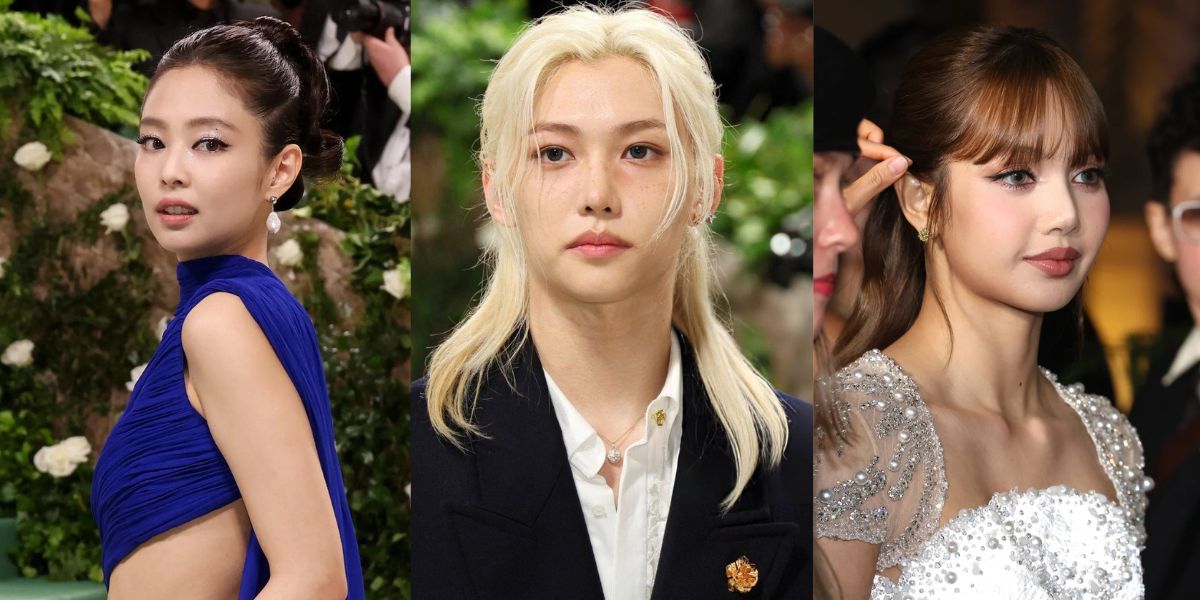
In development: - A gown made entirely of recycled canvas scraps, hand-painted to resemble a chaotic studio floor. - A jumpsuit woven with conductive thread that changes color based on body heat—“like a living mood ring,” per its creator. - A structured bodice cast in translucent resin, embedded with pigment swirls that mimic oil paint in water.
One particularly ambitious project involves a dress grown from mycelium leather, then treated with natural dyes that evolve over the course of the night. “By midnight, it’s a completely different piece,” says the stylist. “That’s the point. Art isn’t static.”
But innovation comes with risk. “If the material degrades on the carpet, is that part of the concept or a disaster?” asks Tran. “You have to plan for both.”
The Risk of Overthinking: When Concept Kills the Moment
Not every stylist is embracing the theme’s depth. Some are betting on simplicity.
“There’s a real danger of becoming so cerebral that you forget this is still a party,” says stylist Elena Ruiz. “If your look requires a 10-minute explanation, you’ve already lost.”
Her approach? A minimalist silver column dress with a single, perfectly placed mirror shard at the collarbone. “It reflects the viewer. That’s the whole idea—art as perception. No thesis required.”
Others are leaning into humor. One client is rumored to arrive in a “living still life”—a gown with mechanical arms holding fruit, inspired by surrealist mannequins. “It’s absurd, yes,” admits the stylist. “But Magritte wore a bowler hat to dinner. Sometimes the weird thing is the point.”
The line between genius and gimmick remains razor-thin. “You can’t just slap a frame on a dress and call it art,” says Rhodes. “But if it makes people stop, look, and think—even for three seconds—you’ve done your job.”
What to Watch For on the Red Carpet
When the steps light up, here’s what top stylists believe will define the night: - The Nude That Isn’t: Sheer dresses with artistic textures—brushstroke embroidery, pigment prints, or structural cutouts. - Art-Historical Remix: Tailored pieces referencing Da Vinci, Kahlo, or Warhol—not as costume, but as mood. - Gender-Fluid Silhouettes: Robes, corsets, and suits that blur lines without spectacle. - Living Materials: Garments that change, degrade, or react—making the wearer part of the art. - The Anti-Statement: Simple, reflective, or mirrored looks that force the audience to confront their own gaze.
The most memorable looks won’t just reference art—they’ll behave like it. They’ll provoke, resist easy reading, and linger in the mind.
Final Advice from the Stylists
“Don’t design for Instagram,” says Chen. “Design for the idea.” “Test the walk,” adds Ruiz. “If it takes two handlers and a prayer, it’s not red-carpet ready.” And Cole’s rule: “If you can explain it in one sentence, you’re ready. If it takes a podcast, start over.”
The Met Gala’s most ambiguous theme may be its most revealing yet—not of fashion, but of intention. In a world where everything can be styled, the boldest choice might be to mean something.
For those dressing for the night: trust the concept, respect the craft, and remember—the carpet isn’t just a runway. It’s a canvas.
FAQ
What should you look for in From Naked Dresses to Mona Lisa Suits: Stylists Decipher the Met Gala’s? Focus on relevance, practical value, and how well the solution matches real user intent.
Is From Naked Dresses to Mona Lisa Suits: Stylists Decipher the Met Gala’s suitable for beginners? That depends on the workflow, but a clear step-by-step approach usually makes it easier to start.
How do you compare options around From Naked Dresses to Mona Lisa Suits: Stylists Decipher the Met Gala’s? Compare features, trust signals, limitations, pricing, and ease of implementation.
What mistakes should you avoid? Avoid generic choices, weak validation, and decisions based only on marketing claims.
What is the next best step? Shortlist the most relevant options, validate them quickly, and refine from real-world results.
