
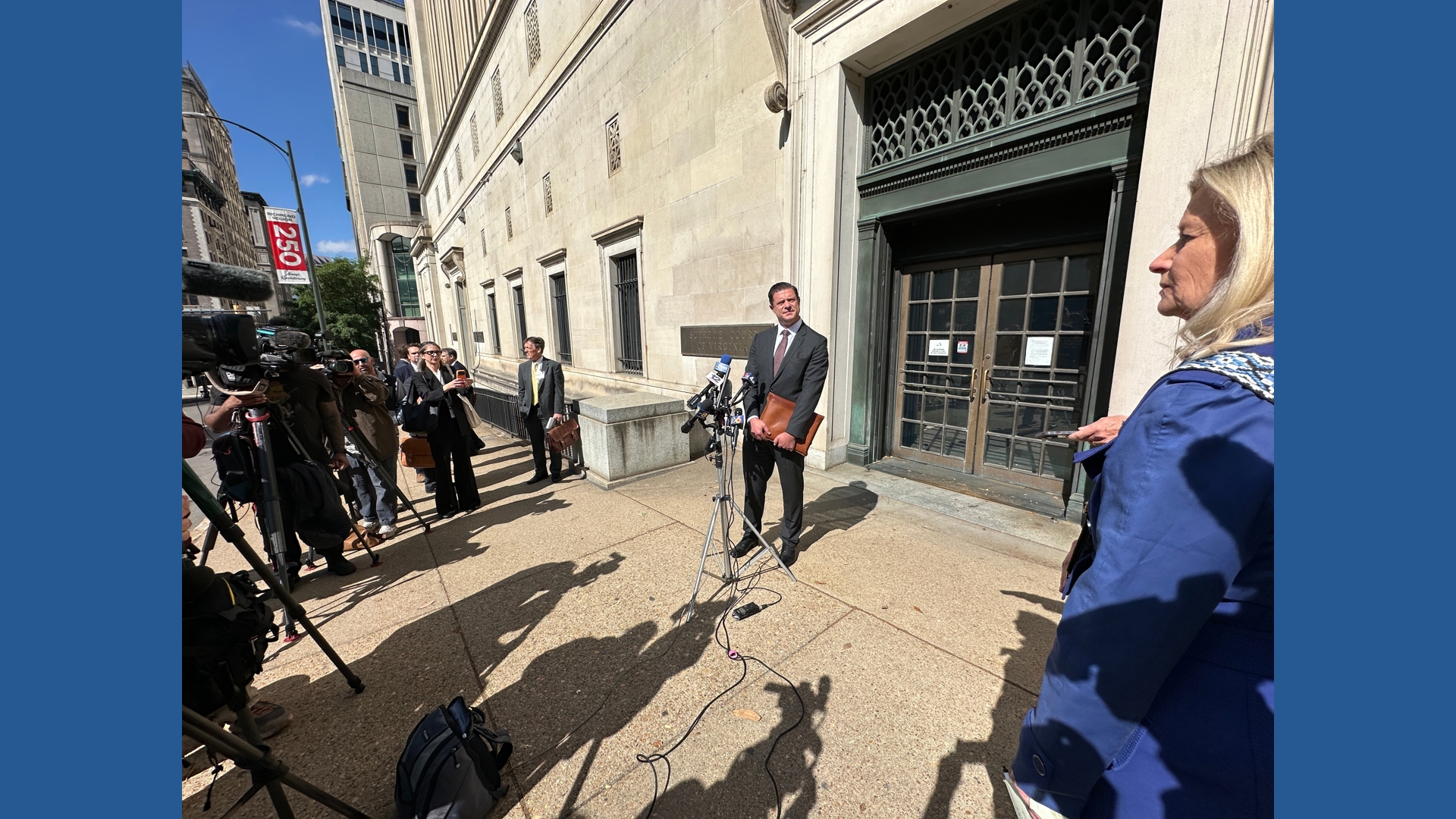
Virginia’s highest court is at the center of a pivotal redistricting battle, deciding whether to block a voter-approved congressional map that tilts in favor of Democrats. The case isn’t just about political advantage—it’s about who gets to draw the lines of representation and under what authority. With nationwide implications for state-level democracy, the ruling could reshape how Virginians vote for Congress and set a precedent for judicial intervention in redistricting.
This isn’t the first time Virginia’s courts have stepped into redistricting. But this moment is unique: a constitutionally backed citizen commission approved the map, only for the state Supreme Court to potentially overturn it. The stakes? The legitimacy of voter-driven reform and the balance of power in a swing state.
The Origins of the Contested Map
In 2020, Virginia voters passed a ballot referendum amending the state constitution to create a 16-member redistricting commission. The goal was clear: end partisan gerrymandering by taking map-drawing power out of the hands of politicians and giving it to a bipartisan group of lawmakers and citizens.
But when the commission deadlocked in 2021—unable to agree on maps for congressional and state legislative districts—the responsibility fell to the Virginia Supreme Court. In a departure from the commission’s intent, the Court appointed a retired North Carolina judge, Paul Ridgeway, to draft the maps.
Ridgeway’s final congressional map produced 7 Democratic-favoring districts and 3 Republican-favoring ones in a state that had previously been split more evenly. Critics argued the map overcorrected, packing Democratic voters into concentrated urban districts while spreading Republican strength across more rural and suburban areas.
Still, the map was implemented and used in the 2022 and 2024 elections. Now, a group of Republican voters is challenging it in court, claiming the map violates the Virginia Constitution’s equal protection and one-person, one-vote principles.
Why the Supreme Court Is Reconsidering the Map
The current legal challenge hinges on two constitutional claims:
- Malapportionment: Plaintiffs argue that some districts deviate too far from equal population size. While the overall deviation is under 10%, certain districts exceed the 2% ideal threshold the Court has previously referenced.
- Partisan Bias: Opponents claim the map intentionally dilutes Republican votes, effectively locking in Democratic gains even in a politically competitive state.
What makes this case unusual is that the map wasn’t drawn by a partisan legislature—it was finalized by a court-appointed special master after the citizen commission failed. Supporters of the map argue that the Court itself is responsible for the outcome it now may strike down.
Yet the current Virginia Supreme Court is no longer the same body that made the original appointment. After a shift in judicial appointments in 2023, the Court now has a conservative majority—raising questions about whether ideology is influencing second thoughts on a decision the previous Court endorsed.
The Role of the Citizen Redistricting Commission
The creation of the citizen commission was hailed as a breakthrough for democratic reform. It reflected a national trend toward depoliticizing redistricting through independent or bipartisan bodies. But Virginia’s model has a fatal flaw: it lacks enforcement power.
When the commission deadlocked, the process defaulted to the state judiciary. That backdoor transfer of authority has become the core vulnerability in the current litigation.
Consider this: the commission’s Democratic and Republican members proposed competing maps. The Democratic version leaned left, the Republican version leaned right. But neither achieved the required bipartisan support. Instead of forcing a compromise, the system handed control to an outsider—a well-intentioned but unaccountable third party.
That’s where Ridgeway came in. Tasked with balancing multiple criteria—compactness, community integrity, and compliance with the Voting Rights Act—he prioritized some over others. His final map preserved majority-minority districts in Richmond, Hampton Roads, and parts of Northern Virginia, which inherently concentrated Democratic voters.
But did that concentration cross the line into unconstitutional gerrymandering? That’s what the Court must now decide.
Legal Precedents and Constitutional Tensions
Virginia courts have historically deferred to legislative maps unless they show extreme imbalance or intentional discrimination. But recent rulings suggest a stricter standard may be emerging.
In Mann v. Davis (2021), the Virginia Supreme Court struck down a state Senate map for splitting too many localities and ignoring municipal boundaries—despite only modest population deviations. The decision signaled that adherence to geographic coherence could outweigh other considerations.
Now, in this new case, plaintiffs are citing Mann to argue that the current congressional map violates similar principles. They point out that the 8th District—covering much of Arlington and Alexandria—was carved in a way that severed natural community ties. Meanwhile, the 5th District, stretching across central Virginia, spans over 130 miles from suburbs to coal country, uniting disparate communities with little in common.
The defense counters that federal law, particularly the Voting Rights Act, requires certain protections for minority voting strength. Eliminating the 3rd and 4th districts—both with Black-majority populations—would undermine decades of civil rights progress.
This conflict reveals a deeper tension: can a map be both racially fair and politically neutral? The Court’s answer will influence not just this map, but how all future maps are evaluated.
Practical Impacts on Voters and Representation
The immediate effect of blocking the current map would be chaos. With the 2026 elections on the horizon, any ruling to invalidate the map leaves little time for a new one to be drawn and vetted.
Imagine this scenario: the Court strikes down the map in late 2025. The legislature could attempt to draw a new one, but with partisan divisions, deadlock is likely. Another trip to the courts would delay candidate filings, confuse voters, and undermine confidence in the electoral process.
Meanwhile, voters in affected districts—especially in Northern Virginia, Richmond, and Hampton Roads—could face redistricting multiple times in a decade. That instability makes it harder for constituents to know who represents them and for candidates to build lasting campaigns.
Worse, if the Court blocks the map without clear guidance for a replacement, it risks appearing politically motivated. That perception, deserved or not, erodes trust in judicial neutrality—a loss that could take years to repair.
What a Ruling Could Mean Beyond Virginia
While this case is rooted in Virginia law, its implications ripple across the country. States with citizen commissions—like Michigan, Colorado, and Arizona—watch closely. If a court can override a voter-mandated process, it weakens the foundation of those reforms.
Consider Michigan, where an independent commission drew a congressional map that slightly favored Democrats in 2022. Republicans sued, but courts upheld the map, citing the will of voters who created the commission. Virginia’s outcome could embolden similar challenges elsewhere.
Conversely, if Virginia’s Supreme Court upholds the current map, it may affirm that judicially drawn maps—even if politically skewed—are valid when born from a failed democratic process. That could protect other court-drawn maps in states like New York and Ohio.
Either way, the decision adds fuel to the national debate over who controls redistricting: politicians, citizens, or judges.

A Path Forward: Fixing the System, Not Just the Map
The real lesson from this crisis isn’t about one map—it’s about flawed systems. Virginia’s redistricting model tried to break the partisan cycle but failed because it lacked a failsafe. Future reforms must address that gap.
Here’s what could help:
- Backup commission authority: If the primary commission deadlocks, a secondary body—composed of non-legislators—could take over, preserving voter intent.
- Clearer judicial guidelines: The Court should define what constitutes unconstitutional gerrymandering in Virginia, reducing arbitrary outcomes.
- Transparent criteria hierarchy: Lawmakers and courts need a ranked list of priorities (e.g., equal population first, then communities of interest, then partisan balance) to minimize subjective decisions.
- Public input windows: Mandated forums where citizens can challenge proposed maps before adoption.
Without these changes, Virginia risks repeating this cycle every 10 years.
The Court’s Decision Could Reshape Power in Congress
Virginia’s 11 congressional seats are often decisive in tight House battles. A map that yields 7 Democratic seats gives the party a near-lock on the delegation, even in a year when statewide races are competitive.
In 2024, for example, while Virginia leaned Democratic in the presidential race, Republican candidates performed strongly in down-ballot contests. Yet they still won only 3 of 11 House seats—evidence of a structural imbalance.
If the Court blocks the current map and forces a more proportional outcome—say, 6-5 or even 5-6—the state could become a true battleground for House control. That would empower swing-district lawmakers, encourage competitive campaigns, and give voters more influence.
But if the map stands, it cements a system where geography and race entrench one party’s advantage—raising democratic concerns that go beyond partisanship.
Conclusion: A Crossroads for Democracy and Fairness
The Virginia Supreme Court now holds more than a map in its hands. It holds the credibility of a reform movement, the clarity of constitutional standards, and the future of fair representation in a key swing state.
Blocking the map may satisfy short-term demands for balance but risks undermining voter-approved reforms. Upholding it preserves stability but may entrench partisan asymmetry.
The best outcome? A ruling that respects the citizen commission’s intent, clarifies legal standards, and pushes the state toward a more resilient redistricting process. Virginians didn’t vote for endless court battles—they voted for fairness. The Court’s duty is to deliver it.
Frequently Asked Questions
Why is the Virginia Supreme Court reviewing a voter-approved map? Although voters approved a redistricting commission, it deadlocked and the Court stepped in to appoint a map drawer. Now, the Court is being asked to review the constitutionality of the resulting map.
Does the map favor Democrats? Yes, the current map leads to 7 Democratic-leaning and 3 Republican-leaning districts, in a state that often votes competitively.
Can courts block voter-approved redistricting systems? Courts can invalidate specific maps if they violate constitutional standards, even if the process was voter-approved.
What happens if the map is blocked? A new map would need to be drawn quickly, likely through the legislature or another court-appointed process, risking delays for the 2026 elections.
Is gerrymandering illegal in Virginia? While not explicitly banned, maps that violate equal population, dilute minority votes, or break communities can be struck down under state and federal law.
How does race factor into the map dispute? The map preserves two majority-Black districts, required under the Voting Rights Act. Removing them could face federal legal challenges.
Could this affect national House control? Yes. Virginia’s delegation can influence which party holds the majority, especially in narrowly divided Congresses.
FAQ
What should you look for in Virginia Supreme Court Weighs Fate of Democratic-Favored House Map? Focus on relevance, practical value, and how well the solution matches real user intent.
Is Virginia Supreme Court Weighs Fate of Democratic-Favored House Map suitable for beginners? That depends on the workflow, but a clear step-by-step approach usually makes it easier to start.
How do you compare options around Virginia Supreme Court Weighs Fate of Democratic-Favored House Map? Compare features, trust signals, limitations, pricing, and ease of implementation.
What mistakes should you avoid? Avoid generic choices, weak validation, and decisions based only on marketing claims.
What is the next best step? Shortlist the most relevant options, validate them quickly, and refine from real-world results.